AirZap (P2P File Transfer)
An instant, zero-cloud peer-to-peer file transfer web app powered by WebRTC DataChannels and a Node.js/Socket.io signaling server, enabling direct end-to-end encrypted sharing across devices with no file size limits.
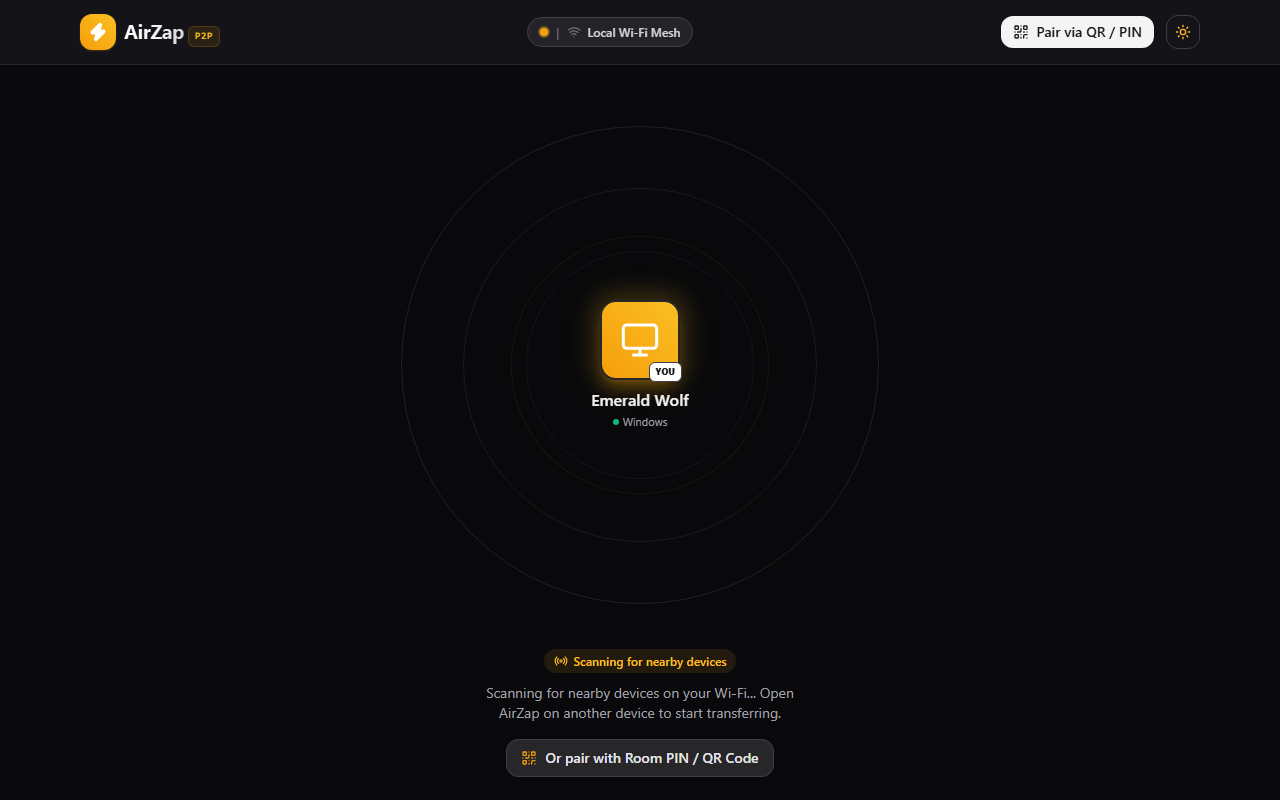
Project Case Study & Overview
Sending a 2 GB video or a folder of photos from a phone to a laptop shouldn't require uploading everything to Google Drive, waiting for sync, and downloading it all over again. I built AirZap so any two devices with a browser can send files straight to each other over WebRTC, with zero cloud storage and no file size caps.
Open AirZap on both devices, pair them, and the file streams directly from one browser to the other.
Zero-Cloud Peer-to-Peer Design
In AirZap, the server never sees your files. Once two browsers establish a connection, every file chunk travels directly over an encrypted WebRTC DataChannel. Because nothing gets buffered in cloud buckets or server disks, there is no artificial size limit and no waiting for a middleman upload before the receiver can start downloading.
How Discovery and Pairing Work
Under the Hood
The client app is built with React and Vite, using native browser WebRTC APIs (RTCPeerConnection and RTCDataChannel) to slice, stream, and reassemble files cleanly across the connection.
The backend is a lightweight Node.js signaling server built with Express and Socket.io. Its only job is initial peer discovery, room management, and relaying SDP offers, answers, and ICE candidates between browsers so they can find each other. As soon as the direct P2P channel opens, the signaling server steps out of the way.